
From Cattle Brands to Trademarks: Protecting Your Brand in the Wild West of Business
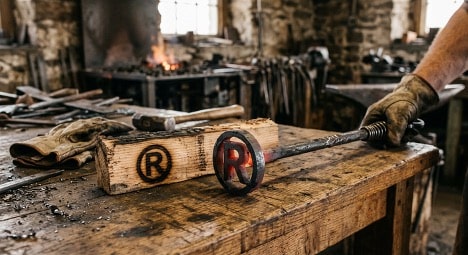
Long before “brand” meant a logo, a tagline, or a feeling customers get when they see your name, it meant something you could smell burning. On the open range of the American West, a rancher’s brand — a distinctive shape burned into a calf’s hide — was the only thing standing between “that’s my cattle” and a very expensive argument. One glance at the mark told everyone on the trail exactly whose herd was whose, and rustling a branded animal was a serious offense precisely because the brand was proof of ownership.
That’s not just a colorful bit of frontier history. It’s the literal ancestor of modern trademark law.
The Original Brand Protection
When ranchers registered their brands with the local cattlemen’s association or county recorder, they were doing something strikingly similar to what a business does today when it files a trademark application with the U.S. Patent and Trademark Office. Both acts say the same thing: this mark identifies something as mine, and I’m putting the world on notice.
The parallels go deeper than the word itself:
A registered cattle brand had to be distinctive enough that it couldn’t be mistaken for a neighbor’s — two ranchers couldn’t both claim a plain circle. Trademark law imposes the same requirement today: your mark has to be distinctive enough to actually distinguish your goods or services from everyone else’s.
A brand only meant something if you used it and defended it. A rancher who let others use his brand without objection risked losing the exclusive right to it. Trademark law works the same way — rights are built through use in commerce, and they can erode if you don’t police unauthorized use.
And just as a clever rustler might alter a brand slightly — turning a bar into a cross, adding a stroke to disguise one mark as another — trademark infringers today rely on the same trick: a name or logo close enough to cause confusion, but just different enough to claim innocence. Courts see through both.
When “Close Enough” Isn’t
This is where a lot of small and growing businesses get burned, so to speak. They assume that as long as their name or logo isn’t an exact copy, they’re safe. But trademark law — like the old brand inspectors riding the range — cares about the likelihood of confusion, not an identical replica. If a customer could reasonably mistake your mark for someone else’s, that’s a problem, whether you meant to cause confusion or not.
We see this play out constantly: a new coffee shop picks a name uncomfortably close to a regional chain’s; a startup’s logo echoes a competitor’s color palette and shape a little too closely; a product name borrows the “feel” of an established brand hoping some of that goodwill rubs off. Sometimes it’s innocent. Sometimes it isn’t. Either way, it can end in a costly dispute — or a rebrand nobody wanted to pay for.
Staking Your Claim the Right Way
The good news is that protecting your brand doesn’t require a six-shooter — just the right paperwork, done early.
Register your mark. A registered trademark is your recorded brand, on file, on notice to the world. It gives you stronger legal ground if someone else tries to ride in on your reputation.
Choose a distinctive mark from the start. The most defensible brands, like the most recognizable cattle brands, are the ones that don’t look like anyone else’s. Descriptive or generic names are harder to protect — a mark that’s inherently distinctive gives you a much stronger claim.
Use it consistently, and watch for imitators. Brands lose strength when they’re used inconsistently or left undefended. Keeping an eye on your industry — and your marketplace — for marks that ride too close to yours is part of actually owning your brand, not just registering it.
Don’t wait for a dispute to find out where you stand. By the time a conflict shows up, it’s often more expensive to fix than it would have been to prevent.
The Range Is Bigger Now, but the Principle Hasn’t Changed
Today’s marketplace is a lot more crowded than the open range ever was, and the “cattle” — your name, your logo, your reputation — moves across state lines and the internet in an instant. But the underlying idea a rancher understood in 1880 still holds: a mark is only worth something if it’s clearly yours, clearly distinctive, and clearly defended.
If you’ve built something worth putting your brand on, it’s worth protecting properly. Our team at Martin IP Law Group helps businesses register, strengthen, and defend their brands — no branding iron required. If you’re not sure whether your mark is as protected as you think it is, we’re happy to take a look.
Got a brand you’d like us to help protect? Reach out to Martin IP Law Group — we’ll help you make sure it’s yours, free and clear.