After several months of consideration and public polling, on September 5, 2018 the town of Madison, Alabama (a suburb of Huntsville, nicknamed “The Rocket City” for its close association with U.S. space missions) and team owner BallCorps, LLC announced the name of its new AA baseball team, which will be known as the “Rocket City Trash Pandas.” For those of you unfamiliar with the modern slang terminology, “trash panda” is a commonly used term for a raccoon. The name makes sense, right? Rocket City for the region where the team will be based and Trash Pandas for an animal (commonly used as mascots for many sports teams) that is indigenous to the region. The name is fun, catchy and creative and perfectly suitable for use in connection with a baseball team in this universe. But, for a moment, let’s consider the Marvel Universe®.

Marvel Characters, Inc. currently holds, or is pursuing federal trademark registrations on almost 1,500 different marks and has been granted almost 10,000 federal copyright registrations. Included in that mix are trademark and copyright registrations to the Guardians of the Galaxy®️ movie and characters, including Rocket Raccoon®️, depicted in the second photo. When compared to the first photo that accompanied the Rocket City Trash Pandas announcement, we think you will see why we have concerns. Will a company that spends millions (perhaps billions) of dollars creating, developing and marketing its characters sit idly by while a AA baseball team in Northern Alabama uses images of an armor-clad Rocket Raccoon®️ to brand its new baseball team called the Rocket City Trash Pandas? We would be surprised if they do – Marvel even has a page on its website for people to report suspected infringement.

In the Trademark Universe, the owner of a mark may be provided with protection for a character’s name, physical appearance and distinctive designs and perhaps other qualities. Famous marks, which invoke an immediate connection in the minds of the consumers with a specific product or service and the source of that product or service, are given a broader scope of protection than ordinary marks. Examples of famous trademarks are APPLE, GOOGLE, MICKEY MOUSE and MAGIC KINGDOM. Acquiring famous mark status “often requires a very distinct mark, enormous advertising investments and a product of lasting value.” It is more than plausible that Marvel could make a case that its Guardians of the Galaxy®️ and Rocket Raccoon®️ marks have achieved “famous mark” status.

Even in the absence of a likelihood of confusion, the owner of a famous mark can bring an action for trademark dilution, which allows the owner of a famous trademark to forbid others from using that mark in a way that would lessen its uniqueness. In most cases, trademark dilution involves an unauthorized use of another’s trademark on products or services that do not compete with, and have little connection with, those of the trademark owner. So it is not inconceivable that a famous trademark used by Marvel to refer to a comic book character might be diluted if another company began using a similar mark to refer to a baseball team.

In some ways the Copyright Universe presents a parallel universe. Under federal copyright law, it is well settled that stock characters are free for anyone to use. However, characters that are depicted graphically or visually, such as in comic books, television, or film are more likely to be extended copyright protection. Thus, a stock picture or graphic of a raccoon as part of the Trash Pandas logo would not likely constitute an infringement. However, as we can see from the second photo, the Rocket Raccoon character is not a “stock” character. Rather, there are elements to the character that render it protectable under copyright law – the particular look and features of the character’s face and the clothing are a few examples. Comparing the two photos above raises some serious issues of copyright infringement should BallCorps use the proposed logo design or one similar to it. Use of a stock image of a raccoon, or one that doesn’t look so strikingly similar to the Rocket Raccoon®️ character would diminish the potential for copyright infringement significantly, but may not be enough to avoid allegations of infringment which can be very expensive to defend.

Apparently BallCorps is not totally oblivious to issues of intellectual property regarding the naming of its team. On July 26, 2018 it filed two applications with the U.S. Trademark Office for registration of the name TRASH PANDAS. If the mark passes muster with the trademark examiner, it will be published for opposition for 30 days in the Official Gazette. It would not surprise us in the least to see Marvel oppose registration of this mark on the basis of potential dilution of its marks. We will continue to monitor the status of these applications as they progress and provide updates along the way.

What lessons can we take from this situation? When starting a new business and branding for that business, file early and often. The US Trademark Office allows an applicant to file an application for registration based on “intent to use” the mark, so actual use is not required. Thus, it may be possible to obtain approval of the mark before you even begin using the name/mark. The applications should also cover any and all goods AND services you intend to offer under the mark. You should also register your logo, slogans and other branding associated with your products and services. A clearance search and opinion from an experienced intellectual property attorney can also give you insight into the rights of others who may have similar marks, which could avoid costly litigation in the future. If you are starting a new business, launching a new product, or re-branding an existing company or product, contact us to ensure your path is clear and your assets are protected.

In December 2017, Galatea Jewelry filed suit against Swarovski in a California Federal Court alleging infringement of its copyrighted jewelry design entitled TWO IN ONE HEART. The TWO IN ONE HEART design was created in 2009 by Galatea principal Chi Huynh to “capture his vision of love as a union of two individuals, at once both separate and together, with an optical illusion of a single heart comprised of two overlapping hearts formed from the same continuous loop of metal.” Galatea claims that it began selling its TWO OF ONE HEART design in 2010, and that beginning in around January 2016, Swarovski began selling its infringing design. The two designs are depicted below:

Galatea

Swarovski


While the Swarovski design is not identical to the copyrighted Galatea design, Galatea alleges that Swarovski merely (1) horizontally flipped the Galatea design shown above left; (2) removed the existing diamonds; (3) covered a larger portion of the design with crystals; and (4) tapered the points and rounded the edges as follows:


In general, copyright infringement occurs when a copyrighted work is reproduced, distributed, performed, publicly displayed, or made into a derivative work without the permission of the copyright owner. Of primary concern where copyrights are concerned, is whether or not there was “copying” of the work. In theory, if two people create the exact same work completely independent from one another, there can be no copyright infringement. Copying can be proven by direct evidence (an admission, etc.) or circumstantial evidence.  Circumstantial evidence of copying requires a showing of “substantial similarity”: (1) access by the alleged infringer to the copyrighted work and (2) similarity of the alleged infringing work to the original copyrighted work. While Galatea does not claim that it had any direct dealings with Swarovski, it does claim that Swarovski had access to the the TWO IN ONE HEART design through Galatea’s catalog, retail jeweler network and website as well as through various trade shows.

Assuming copying can be proven, a plaintiff must next demonstrate that it was the copyrightable elements of their design that were copied. This requires removing the ideas, scenes-a-faire (commonplace themes), facts, and public domain materials from the alleged infringing work. In the affirmative defenses raised by Swarovski in its answer filed in January 2018, the defense of Non-Copyrightable Material is asserted. Presumably, Swarovski is relying upon the scenes-a-faire doctrine, under which the courts will not protect commonplace elements of a work. Sequences of events which necessarily flow from a common theme or commonplace ideas where the elements of the work are indispensable or are standard in the treatment of a certain idea are considered to be scenes-a-faire and are not protectable under copyright law. For example, a court has held that a motion picture about the South Bronx would need to feature drunks, prostitutes, vermin, and derelict cars to be perceived as realistic, and therefore a later film that duplicated these features of an earlier film would not infringe. Scenes-a-faire are still entitled some level of protection, although it is relatively thin. Where scenes-a-faire are concerned, a plaintiff must prove that the infringing design is “virtually identical” to the copyrighted design.

So how does a jewelry designer or artist protect himself or herself against infringers? The first step is to identify what intellectual property protections are available. Jewelry designs, for the most part, are capable of being protected by copyright. Copyright protection attaches upon creation of the work. The designer should clearly mark each piece of jewelry with the appropriate copyright notice to place potential infringers on notice of his/her claim to protection under copyright laws.

In addition, design patent protection may be available for some jewelry designs. Design patents protect the ornamental features and overall design of an invention. Unlike copyrights, infringement of a design patent may be found in the absence of any proof of copying, so long as an ordinary observer who is familiar with the prior art would conclude that the allegedly infringing article is “substantially similar” to the patented design.

A trademark is a word, phrase, symbol, and/or design that identifies and distinguishes the source of the goods of one party from those of others. While they normally would not be used to protect the jewelry design itself, trademarks can be used to distinguish the name of the design, or line of designs from others. For example, Galatea use the trademark Two of One Heart™ to identify its line of jewelry related to the copyright registration.

Once the intellectual property has been properly identified, steps must be taken to protect it. Under U.S. Patent Law, a design patent application must be filed within one year of the first public sale, use or disclosure of the invention or the inventor forfeits the ability to secure patent protection. Trademarks may be protected under common law without the need for a federal registration. However, there are several benefits to securing a federal trademark registration, including nationwide protection and incontestability of the mark after a certain period of time. Lastly, as discussed above, copyright protection begins upon creation of the work, but registration provides the owner with a number of additional benefits, including the right to sue alleged infringers in Federal Court.

Lastly, after protections are secured, the designer must enforce his/her rights. While there is not necessarily a duty to actively seek out potential infringers, a copyright or patent owner who turns a blind eye to infringing activity is in danger of having his or her intellectual property rights diminished or extinguished.

A jewelry designer should seek the advice of a qualified intellectual property attorney to guide him/her through the process of identifying, protecting and enforcing his/her rights. While it may not seem too difficult to do it yourself, simple errors in that process can undermine protection. At Martin IP Law Group, we take the time to work with designers, artists and inventors to build the best plan to protect their valuable property. Contact us today to see how we can help you.

As we say goodbye to 2017 and ring in 2018, we thought it would be a good idea to take a look back on some of the biggest game changing decisions from last year in intellectual property and look forward to how they might affect you and the world in 2018. While there were many to choose from, we selected three – a patent case, a trademark case, and a copyright case.

PATENTS

Since the passage of the America Invents Act (AIA) in 2012, there has existed a faster and cheaper alternative to the federal court system for attacking the validity of an issued U.S. Patent. An inter partes review is a trial proceeding conducted at the USPTO’s Patent Trial and Appeal Board to review the patentability of one or more claims in an issued patent under certain limited circumstances. A third party instituting an inter partes review must show that there is a reasonable likelihood that the petitioner would prevail with respect to at least one claim challenged. If the proceeding is instituted and not dismissed, a final determination by the Board will be issued within one year (much faster than the typical case in federal court).

The constitutionality of the inter partes review is under attack in Oil States Energy Services, LLC v. Greene’s Energy Group, LLC, which was argued before the U.S. Supreme Court in November 2017. The sole issue now being considered by the Supreme Court is whether inter partes review violates the Constitution by extinguishing private property rights through a non-Article III forum without a jury. A few years back (120 to be exact), in McCormick Harvesting Machine v. Aultman, the U.S. Supreme Court addressed this issue under similar circumstances, holding that “[t]he only authority competent to set a patent aside, or to annul it, or to correct it for any reason whatever, is vested in the courts of the United States, and not in the department which issued the patent.” Stay tuned to see if this “ancient” interpretation of the Constitution holds up in 2018.

TRADEMARKS

In Our September 2017 Blog and Newsletter we reported to you on the death of disparagement in the world of trademarks. In Matal v. Tam, Supreme Court ruled that the United States Patent & Trademark Office (PTO) could not refuse registration of the name “The Slants” to an Asian-American dance rock band from Portland, Oregon on the grounds that the phrase constitutes a slur and is offensive to Asian-Americans. In doing so, the Supreme Court ruled that the trademark law barring disparaging terms infringes on free speech rights, and, as such is unconstitutional.

The issue was raised again last month in In re Brunetti, a decision by the U.S. Court of Appeals for the Federal Circuit. The Federal Circuit held that the “immoral” or “scandalous” marks provision of the Lanham Act is also facially invalid under the First Amendment. Brunetti
is the owner and founder of FUCT – a clothing brand that has been referred to as one of the pioneering brands of modern streetwear, often incorporating various elements and icons of pop culture alongside anti-government and anti-religious campaigns into their designs. It is worth noting that, in its opinion, the Federal Circuit concluded that strict scrutiny (high burden of proof), rather than intermediate scrutiny (intermediate burden of scrutiny as the name implies) is the applicable standard in assessing the issue because the law “regulates the expressive components of speech, not the commercial components of speech”. Even if the government concludes that the “immoral” or “scandalous” provision cannot be saved in light of Tam, there may be good reason to request review by the entire panel of the Federal Circuit or the U.S. Supreme Court on the proper level of scrutiny to be applied, particularly since federal trademarks are. by there very nature, “commercial”. Stay tuned!

COPYRIGHTS
Section 411 of the Copyright Act has long provided that “no civil action for infringement of the copyright in any United States work shall be instituted until preregistration or registration of the copyright claim has been made”. At present, there exists a split between the various Circuit Courts of the United States as to just exactly when such a registration or preregistration “has been made”. In the Fifth Circuit (Texas, Louisiana, Mississippi) and Ninth Circuit (California, Arizona, Nevada, Oregon, Washington, Idaho, Montana) this is considered to have occurred when the copyright holder delivers the required application, deposit and fee to the Copyright Office. In contrast, the Tenth Circuit (Colorado, Utah, Wyoming, Kansas, Oklahoma, New Mexico) and Eleventh Circuit (Alabama, Georgia, Florida) require that the Copyright Office “act” on the application before registration or preregistration is considered to have been made. To complicate things further, our own Seventh Circuit (Indiana, Illinois, Wisconsin) has issued conflicting opinions on the issue.

With any luck, the U.S. Supreme Court will resolve this difference sometime in 2018. The loser of the 2017 decision of the Eleventh Circuit Court of Appeal in Fourth Estate Public Benefit Corp. v. Wall-Street.com, LLC is requesting the U.S. Supreme Court review the case and resolve the split between the circuits once and for all. At the present time, the U.S. Supreme Court has not yet determined whether it will hear the case, and has asked the U.S. Solicitor General to weigh in with his views on the issue. Hopefully this is a sign that the Supreme Court is considering hearing the case, particularly for those of us situated in the Seventh Circuit where there is no clear answer to this question.

Do you have issues involving patents, trademarks, copyrights, or trade secrets, or want to know more about protecting your valuable intellectual property? If so, contact us to discuss how we can help you protect these valuable assets and make 2018 your most successful and profitable year ever. Happy New Year!

Each year in April, Edison Universe celebrates student inventors with a contest that allows students to showcase their inventions for an opportunity to win one of several scholarships. Many students submitted entries, and the following three inventions were selected as student recipients of the 2017 Edison Award.

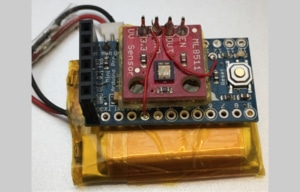
NOVA Personal UV Sensor 

Invented by students Kali Watkins, Connor French and Brooke Mitchell of Park City, Utah, the NOVA Personal UV Sensor was developed to help prevent skin cancer and to help people develop healthy sun-exposure habits. The commercial version of the invention measures the sunburning portion of the UV spectrum. It allows the user to display UV index, dose rate, and daily accumulated dose. It is available online and sells for $375 at NovaLynx.

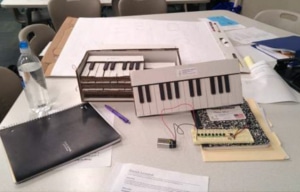
Intonation Portable Piano Keyboard

Piano keyboards, even the modern electronic versions, are bulky and difficult to store and transport. The Intonation Portable Piano Keyboard invented by students Hannah Chen and Seth Mazza of Peoria, Arizona can be broken down into designated segments for easy storage and transportation. Our search of the internet did not reveal any information regarding patents on this invention, nor did it reveal any commercially available version of the invention. However, there are a few videos on YouTube which suggest that others are working on similar concepts – Portable Piano First Prototype and Travel anywhere with real portable piano keyboard. Hopefully Chen and Mazza timely filed a patent application for their invention and a trademark application to protect that catchy name to protect their valuable intellectual property!

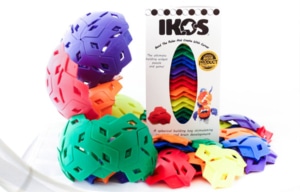
IKOS Toys

Park City, Utah is home to a program called CAPS, a hands-on engineering program that allows students to explore the real world during high school hours. It is also the home of the third 2017 student Edison Award winners who created IKOS™, a modular spherical construction toy for innovative kids of all ages. This innovative product has won multiple consumer awards, including Creative Child Magazine’s 2016 Puzzle of the Year and Product of the Year Awards. It is available online at IKOS Toys.

These student winners of the Edison Award have looked at problems within their community and have come up with innovative solutions. With the assistance of the Edison scholarship, they will be able to take their innovative spirit to the next level at the college of their choice.

Does your student have a great idea? The final deadline for 2018 Edison Award Nominations is November 17, 2017. To qualify for consideration, the product or service must be launched and available to end-users between July 1, 2016 and February 28, 2018. Winners are announced at the Edison Awards Gala in New York, NY in April 2008.

Before getting too far down the road, it’s important to identify and protect any intellectual property (patents, trademarks, copyrights and/or trade secrets) associated with your student’s innovative product or service. Contact us today to see how we can help you identify and protect these valuable assets.

Skip to content